
You've studied the ECG. So why do you still freeze at the tracing?
It's rarely a lack of content. It's scattered study, memorized criteria, too little practice on real ECGs and no one to ask when a question comes up. Aprenda ECG Pro was built around each of those sticking points.

The most common sticking points in learning the ECG.
We hear these from students, residents and practicing physicians. If one of them sounds like you, the problem isn't you. It's how the ECG is usually taught.
I get the explanation, but I can't spot the pattern when the tracing is in front of me.
I memorize the criteria for the exam, and a few weeks later they're gone.
On shift, I waste time hunting for the right criterion across books, PDFs and Google.
I'm not sure whether what I learned still holds or has changed in the literature.
My studying is scattered: I don't know what comes next or how far I've come.
I get stuck on a question and there's no one to ask right then.
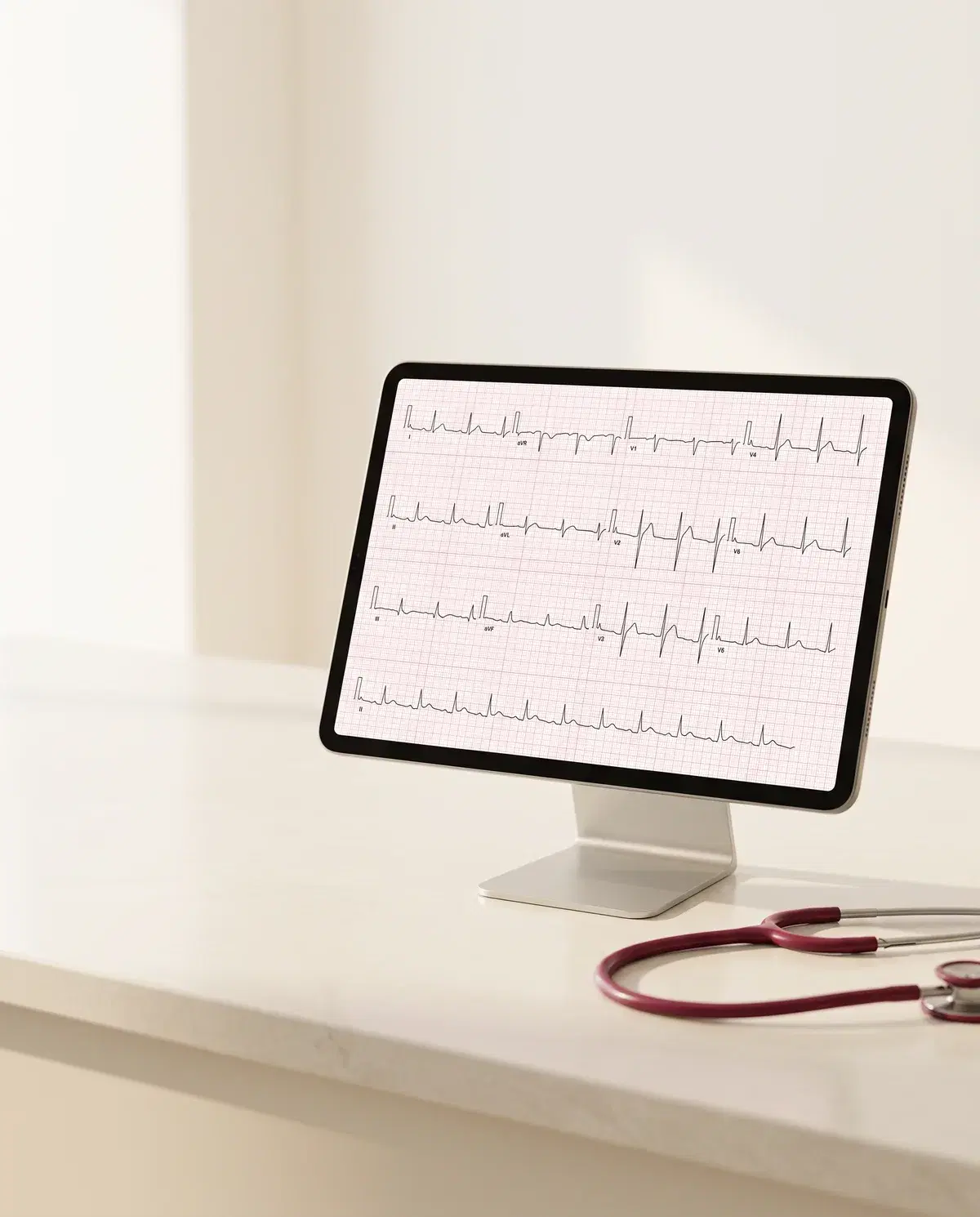
Reading about ECGs isn't the same as reading ECGs.
You follow the text and ace the theory, but real tracings come with noise, normal variants and overlapping findings. Without seeing lots of ECGs, pattern recognition never becomes automatic.
- ECG BankThousands of tracings, filterable by diagnosis, finding and rhythm.
- ECG practiceModules on rhythm, rate, axis and intervals, one step at a time.
- Interactive clinical casesFrom tracing to management, with the reasoning explained at every stage.
What you don't review, you forget.
Cramming criteria the night before works for the exam and fades within weeks. Without active review and a clear path, every time you pick it back up, you start from scratch.
- Study ModeA guided track through ECG topics, with your progress tracked.
- Questions and flashcardsActive practice with explained answers and review of what slips away.
- Mind maps and audio summariesEach topic at a glance, plus reviews to listen to on the go.

On shift, there's no time to go searching.
The patient is in front of you, and the criterion you need is in a book at home, a lost PDF or a website you're not sure you can trust.
- Quick referenceCriteria and differential diagnoses in seconds, no long reads.
- Interactive toolsQTc, electrical axis, Sgarbossa, Brugada, Vereckei and other calculators and algorithms.
- Clinical managementHow the finding changes your decision, straight to the point.
Much of what's taught about the ECG has already changed.
Revised criteria, new coronary occlusion patterns, concepts that have been retired. Old handouts and random videos won't tell you when something is out of date.
- Complete referenceMore than 200 articles, from the fundamentals to channelopathies, reviewed and referenced.
- UpdatesWhat's new in papers and guidelines, and what it changes in practice.
- Point of viewCritical takes on myths and outdated concepts that are still going around.
Questions come up when no one's around.
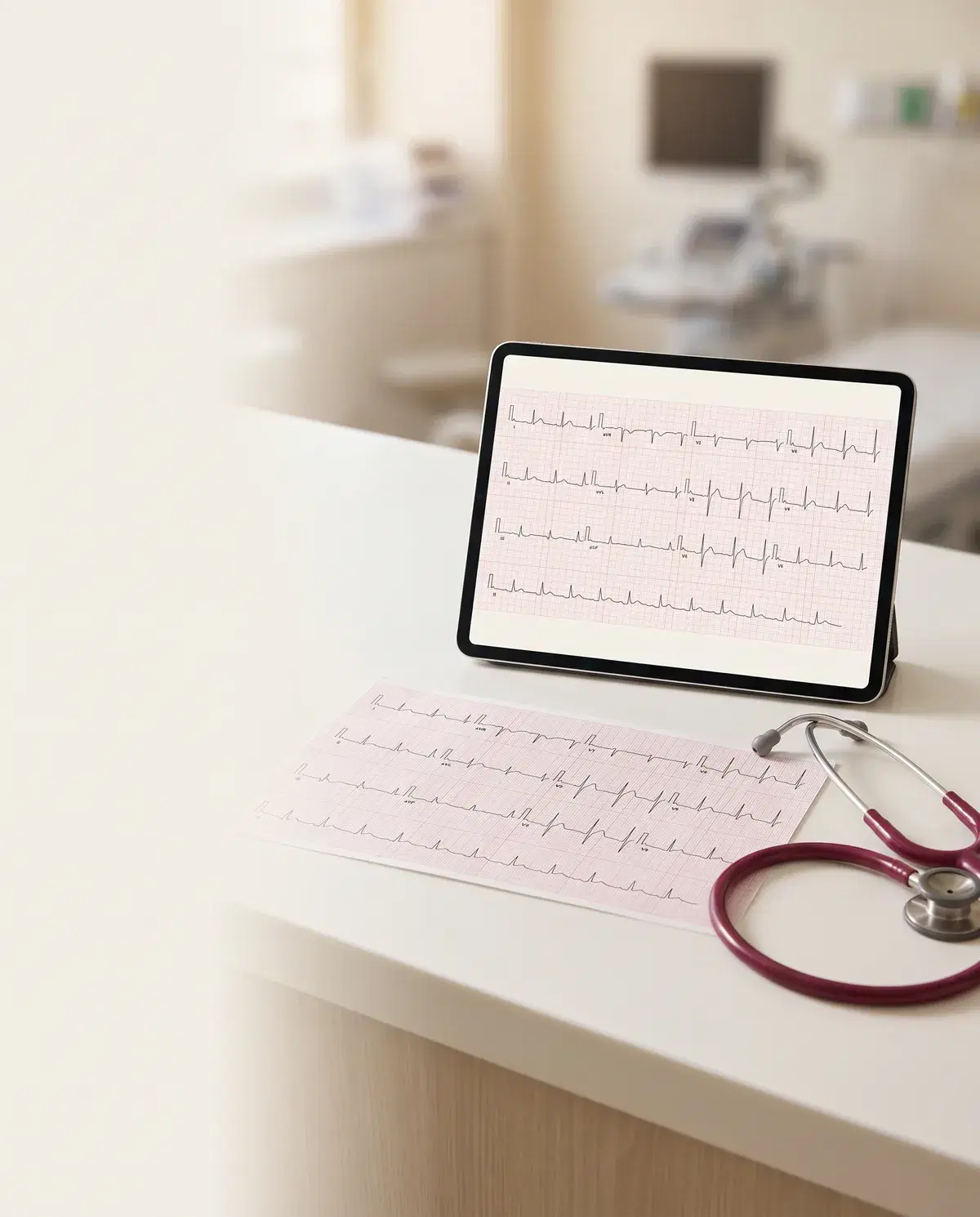
At 11 p.m., halfway through a topic, a question stops you cold. With no answer, you skip it, carry the gap forward or call it a night.
- Built-in ECG AIA chat inside the platform to explain, compare topics and review criteria.
- Grounded in the contentThe conversation starts from the topic you're studying.
- Support, not a shortcutHelps you organize your reasoning without replacing clinical judgment.

Choose how far you want to go.
Two plans: Free, to explore the platform for 7 days, and Pro, with everything included. Pricing will be announced soon.
Free
- Reference, practice and tools
- 7 days of access
- No Study Mode, ECG Bank or AI
Pro
- The whole platform
- Study Mode and ECG Bank
- Every learning tool
- Built-in ECG AI
Stop starting the ECG from scratch every time.
Practice on real tracings, active review, bedside reference and AI, all in one place. Launching soon.