

Hypothermia, defined as a core body temperature below 35°C, can cause characteristic electrocardiographic changes that reflect the effects of extreme cold on the heart and the conduction system.
Electrocardiographic Changes
- Notch at the end of the QRS with upward convexity: Osborn J waves
- Sinus bradycardia
- Atrial and ventricular arrhythmias
- Prolongation of the PR, QRS and QTc intervals
- Shivering artifact
ECG in Hypothermia
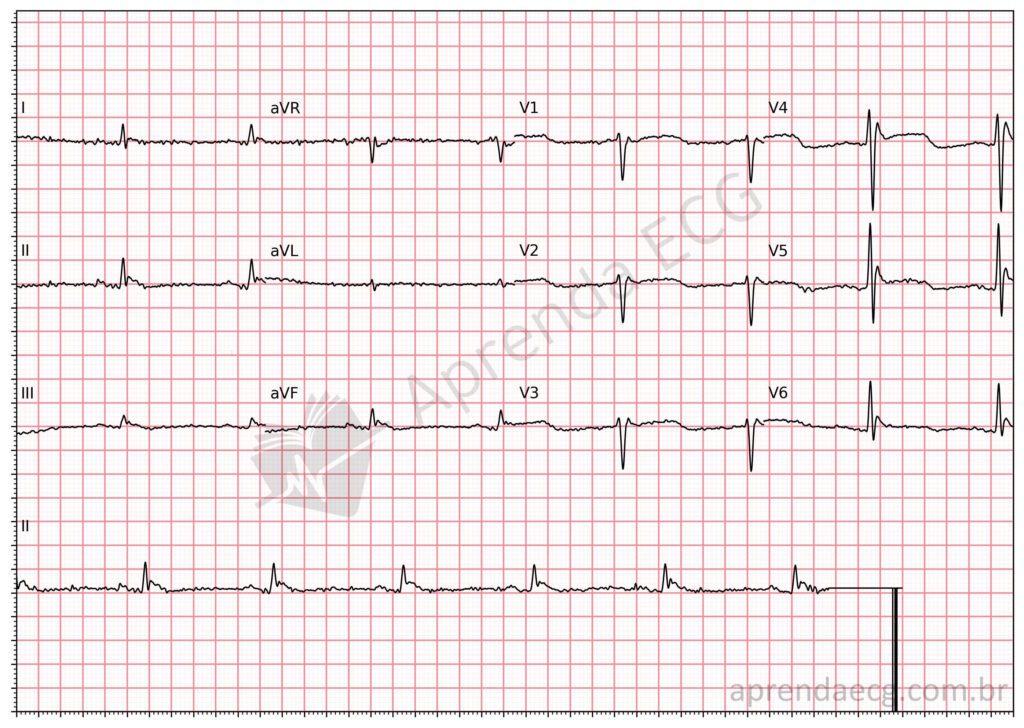
Hypothermia. The characteristic change in hypothermia is the appearance of Osborn J waves. In addition, shivering caused by hypothermia produces the artifacts seen in the baseline.
Related Topics
References
- Mattu A, Brady WJ, Perron AD. Electrocardiographic manifestations of hypothermia. Am J Emerg Med. 2002;20(4):314–26.
- de Souza D, Riera ARP, Bombig MT, Francisco YA, et al. Electrocardiographic changes by accidental hypothermia in an urban and a tropical region. J Electrocardiol. 2007;40(1):47–52.
- Osborn JJ. Experimental hypothermia; respiratory and blood pH changes in relation to cardiac function. Am J Physiol. 1953;175(3):389–98.
- Chhabra L, Devadoss R, Liti B, Spodick DH. Electrocardiographic Changes in Hypothermia: A Review. Ther Hypothermia Temp Manag. 2013;3(2):54–62.


