

Ventricular preexcitation is an electrocardiographic finding characterized by abnormal electrical conduction from the atrium to the ventricle through an accessory pathway that bypasses the atrioventricular node. This results in early activation (preexcitation) of the ventricular myocardium. The most common example of this condition is Wolff-Parkinson-White (WPW) syndrome.
Electrocardiographic Criteria
- PR interval < 120 ms
- Slurring of the initial portion of the QRS complex (delta wave)
- QRS usually > 120 ms
- Secondary ventricular repolarization abnormalities
ECG in Ventricular Preexcitation
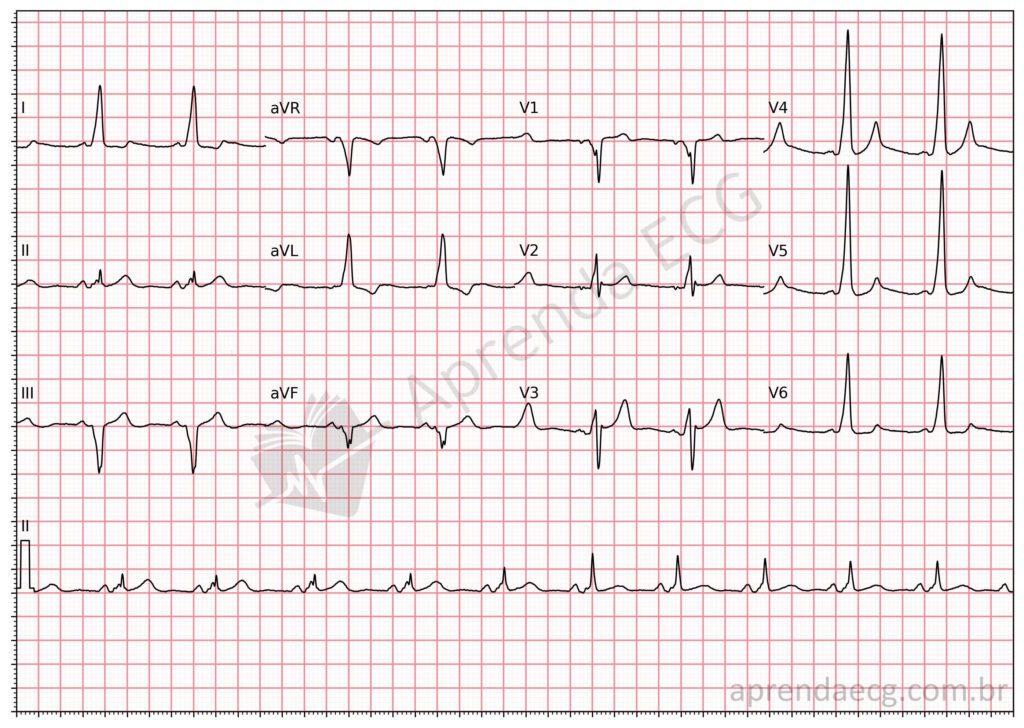
Ventricular preexcitation. Characterized by a short PR interval, delta wave, prolonged QRS complex and secondary ventricular repolarization abnormalities.
Related Topics
References
- Alencar JN. Tratado de ECG. 2022.
- de Alencar Neto JN, Sakai MH, de Almeida Neto RG, Scheffer MK, Alencar e Silva GPS, Cirenza C, et al. EPM algorithm: A stepwise approach to accessory pathway localization in ventricular pre-excitation. J Electrocardiol. 2024;84(500):1–8.


