The spiked helmet sign is a rare, high-risk electrocardiographic finding, first identified in patients with acute abdomen and thoracic disorders. Since then, our understanding of it has evolved, linking it to serious conditions such as intracranial hemorrhage, sepsis and critical metabolic disturbances. In this article, we explore the origin, electrocardiographic criteria and clinical implications of this sign.
What Is the Spiked Helmet Sign?
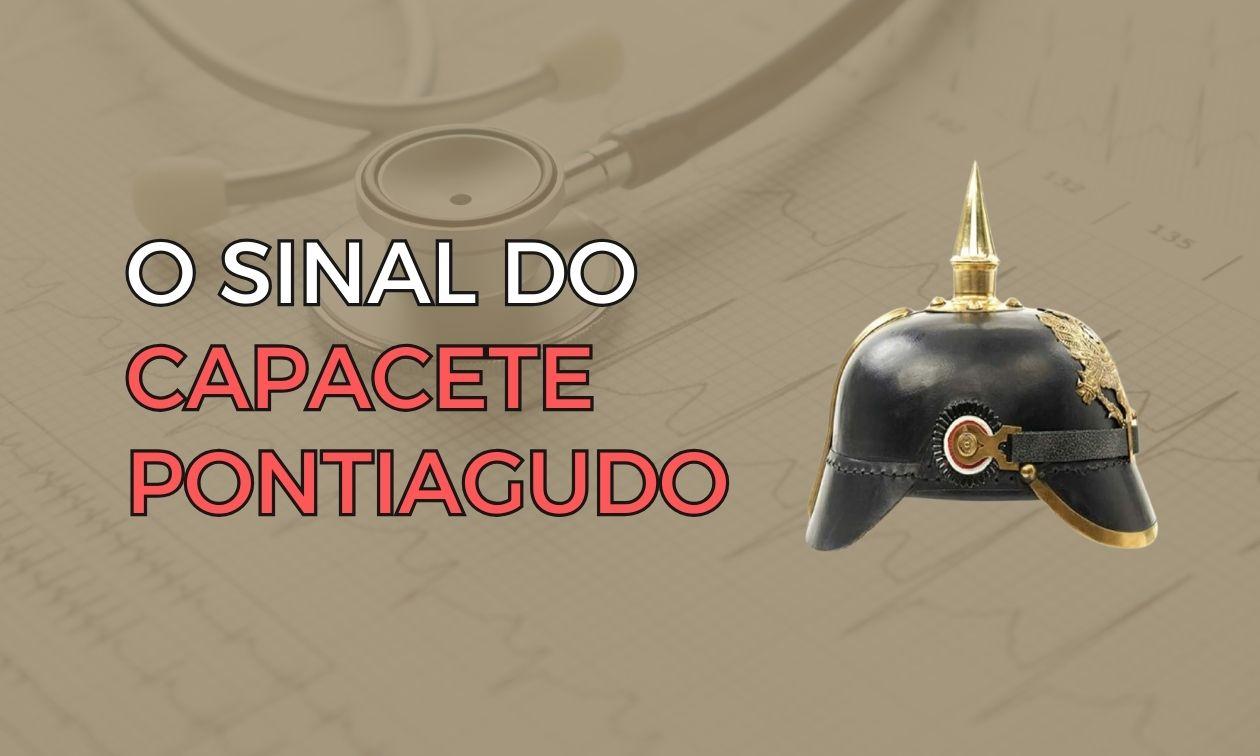
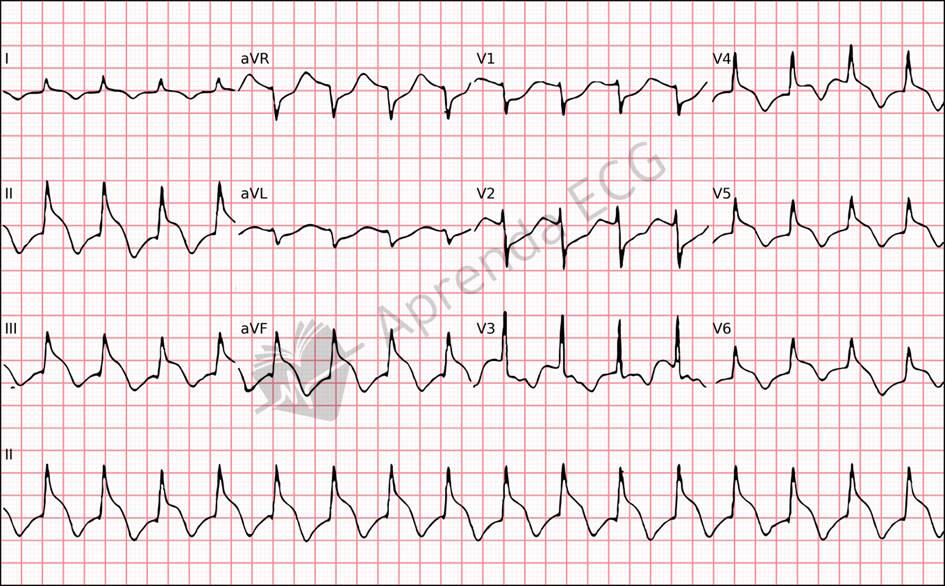
The unusual name comes from the characteristic shape of the electrocardiogram (ECG) tracing: a dome formed by ST-segment elevation, with a spike corresponding to the QRS complex, resembling the Prussian military helmet. This pattern usually occurs with marked QT prolongation, often above 550 ms.
Initially, the sign was thought to be an artifact caused by mechanical skin stretch, provoked by a rapid rise in intra-abdominal or intrathoracic pressure, or by synchronous contractions of the diaphragm and heart. However, subsequent studies revealed its association with serious pathological processes.

Electrocardiographic Criteria
The criteria for identifying the spiked helmet sign include:
- Baseline shift, characterized by significant ST-segment elevation.
- QT interval prolongation, often with values above 550 ms.
- A dome and a spike in the tracing, creating the appearance of the spiked helmet.
These changes are most evident in the precordial leads and usually progress over time.
Clinical Considerations and Pathophysiology
The spiked helmet sign is closely linked to autonomic dysregulation and sympathetic nervous system hyperactivity occurring in response to severe clinical conditions. Some important observations are highlighted below:
- Intense sympathetic activity:
Excessive catecholamine release can lead to exaggerated myocardial stimulation, necrosis and myocardial stunning. - Insular injury:
Irritation or injury of the insular region of the brain can trigger a hyperadrenergic state, contributing to the ECG changes. - Association with Takotsubo syndrome:
The sign often appears in patients with Takotsubo, given the similar pathophysiological substrate. - Relationship with stellate ganglion ablation:
Cases reported after stellate ganglion ablation support the hypothesis of a hyperadrenergic state as the trigger for the sign.
Prognosis and Clinical Impact
The spiked helmet sign is associated with a guarded prognosis. It is often identified retrospectively and, in many cases, signals a high risk of serious complications such as malignant arrhythmias. Torsades de pointes is one of the arrhythmias most commonly observed in these patients.
Case studies highlight its high mortality rate:
- Case series: 6 of 8 patients died between 1 and 10 days after the sign was first recorded.
- Review of case reports: in an analysis of 32 patients, 19 (59%) died in hospital.
These data reinforce the importance of recognizing and monitoring patients with the spiked helmet sign, who often require intensive management and advanced support.
Conclusion
The spiked helmet sign is more than an electrocardiographic curiosity: it is a marker of clinical severity, associated with critical conditions and high mortality. Its early recognition on the ECG is essential to guide therapeutic interventions and improve outcomes in critically ill patients.
References
- Scheffer MK, De Marchi MFN, de Alencar Neto JN, Felicioni SP. Eletrocardiograma de A a Z. São Paulo: Manole, 2024.
- Littmann L, Monroe MH. The “Spiked Helmet” Sign: A New Electrocardiographic Marker of Critical Illness and High Risk of Death. Mayo Clin Proc. 2011;86(12):1245–6.
- Mahmoudi E, Hui JMH, Leung KSK, Satti DI, et al. Spiked Helmet Electrocardiographic Sign-A Systematic Review of Case Reports. Curr Probl Cardiol. 2023;48(3):101535.