Potassium plays an essential role in maintaining the electrical potential of cardiac cells. When serum levels rise significantly, important changes can occur on the electrocardiogram (ECG), reflecting the influence of this ion on the heart. Let's explore how these changes manifest according to the severity of hyperkalemia.
The Role of Potassium in Cardiac Activity
As the most abundant intracellular ion, potassium regulates the transmembrane potential of cardiac cells. When serum potassium exceeds 5.5 mEq/L, the risk of electrical disturbances in the heart increases, especially with values above 6.0 mEq/L.
Classic Electrocardiographic Changes of Hyperkalemia
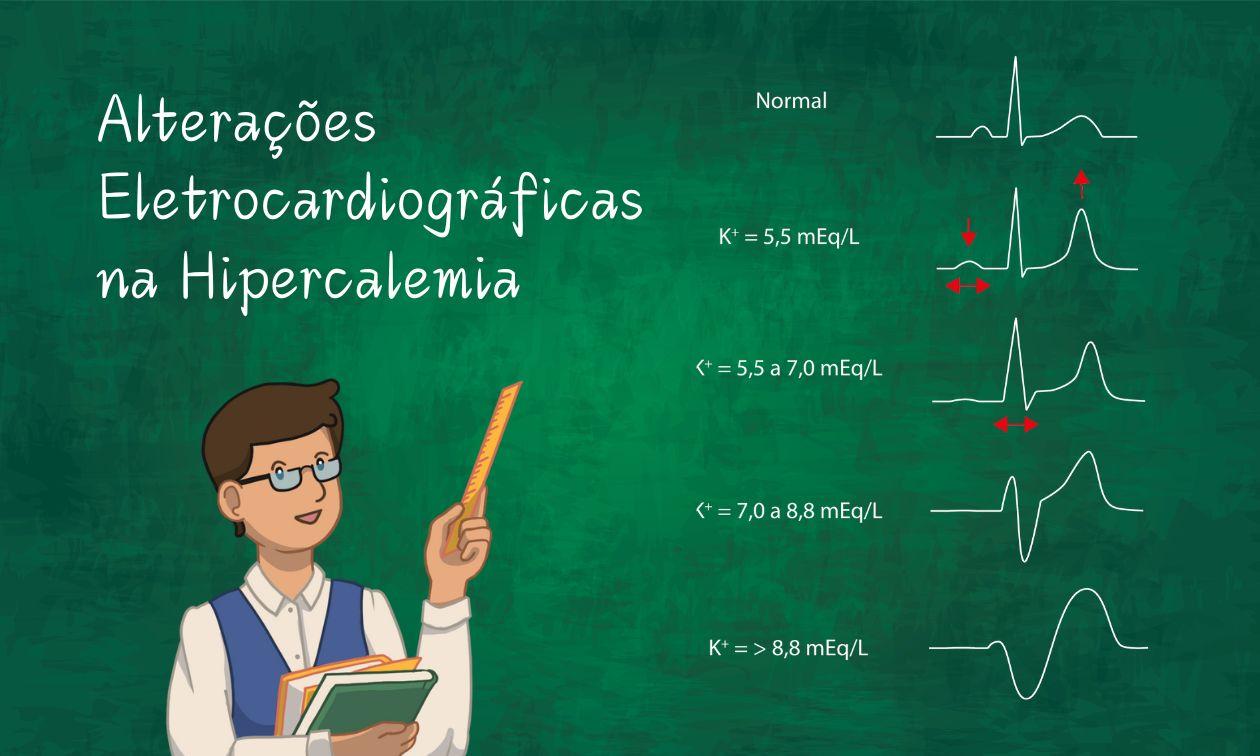
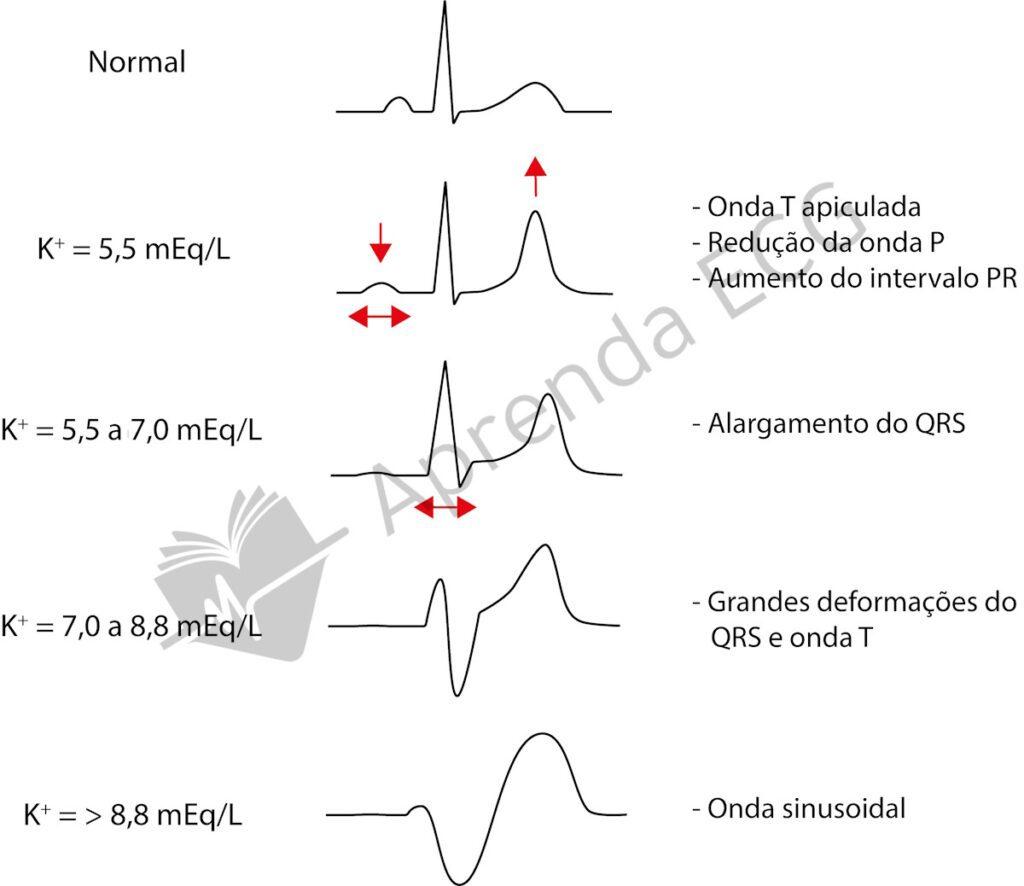
ECG manifestations vary according to the serum potassium level:
- 5.5 – 6.5 mEq/L: tall, symmetric, narrow-based T wave (“peaked” appearance).
- 6.5 – 7.0 mEq/L: reduced P-wave amplitude and progressive PR prolongation.
- 7.0 – 9.0 mEq/L: progressive widening of the QRS complex, with possible ST-segment changes.
- > 9.0 mEq/L: sine-wave pattern on the ECG, associated with a high risk of ventricular fibrillation (VF) and asystole.
Impact on Conduction and Cardiac Rhythm
In addition to morphological changes in the ECG tracing, hyperkalemia can cause:
- Sinus bradycardia.
- Ectopic rhythms (atrial or junctional).
- Atrial fibrillation (AF).
- Sinoatrial (SA) blocks and atrioventricular (AV) blocks of various degrees, including complete heart block.
Progression and Severity on the ECG
As potassium levels rise, the changes become more severe, progressing to a sine-wave ECG pattern, a sign of imminent risk of malignant arrhythmias. This progression highlights the importance of recognizing these changes early, especially in patients with presentations suggestive of fluid and electrolyte disorders.
Conclusion
The ECG is an indispensable tool in the management of hyperkalemia, allowing early identification of electrical changes that can progress to fatal arrhythmias. Recognizing these changes at each stage of the disorder is essential for risk stratification and immediate therapeutic intervention.
References
- Scheffer MK, De Marchi MFN, de Alencar Neto JN, Felicioni SP. Eletrocardiograma de A a Z. São Paulo: Manole, 2024.
- Alencar JN. Tratado de ECG. 2022.