

Fragmentation of the QRS complex is a recognized marker of myocardial scar and fibrosis. When a necrotic area is depolarized more than 40 ms after the onset of ventricular activation, the middle or end of the QRS complex is altered, with the appearance of fragmentation, “notches” or “slurs”.
Electrocardiographic Criteria
- An additional R wave (R’) or a notch in the R wave or in the nadir of the S wave (fragmentation) in two contiguous leads corresponding to a coronary territory, with QRS < 120 ms. When the QRS is > 120 ms, two or more notches
ECG in QRS Fragmentation
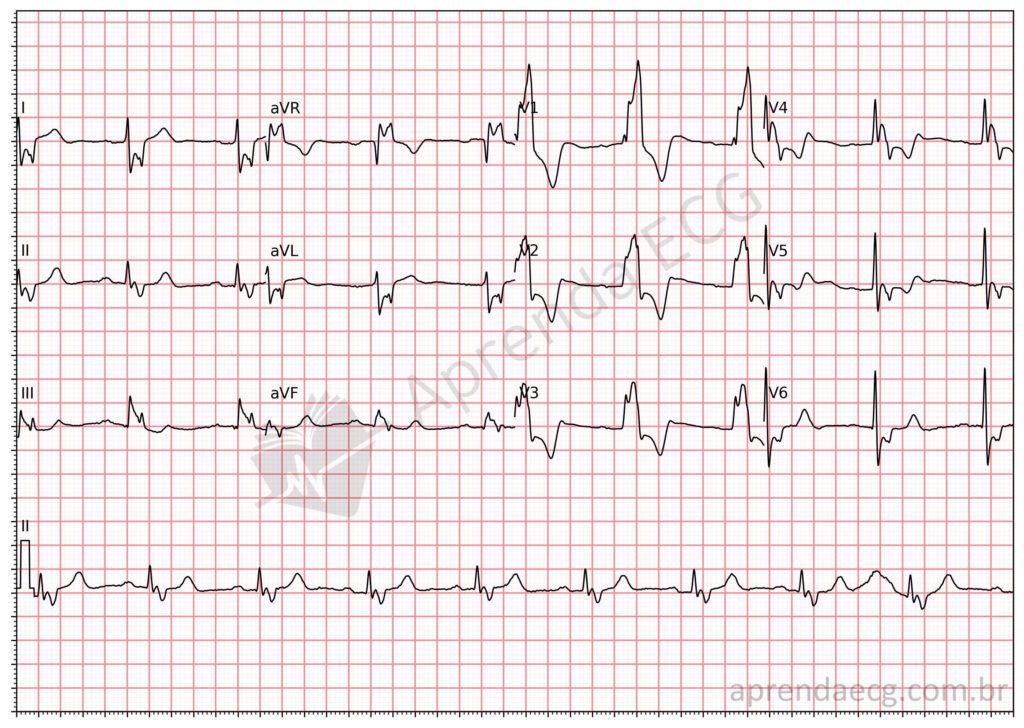
QRS fragmentation. RBBB with notching of the QRS complexes.
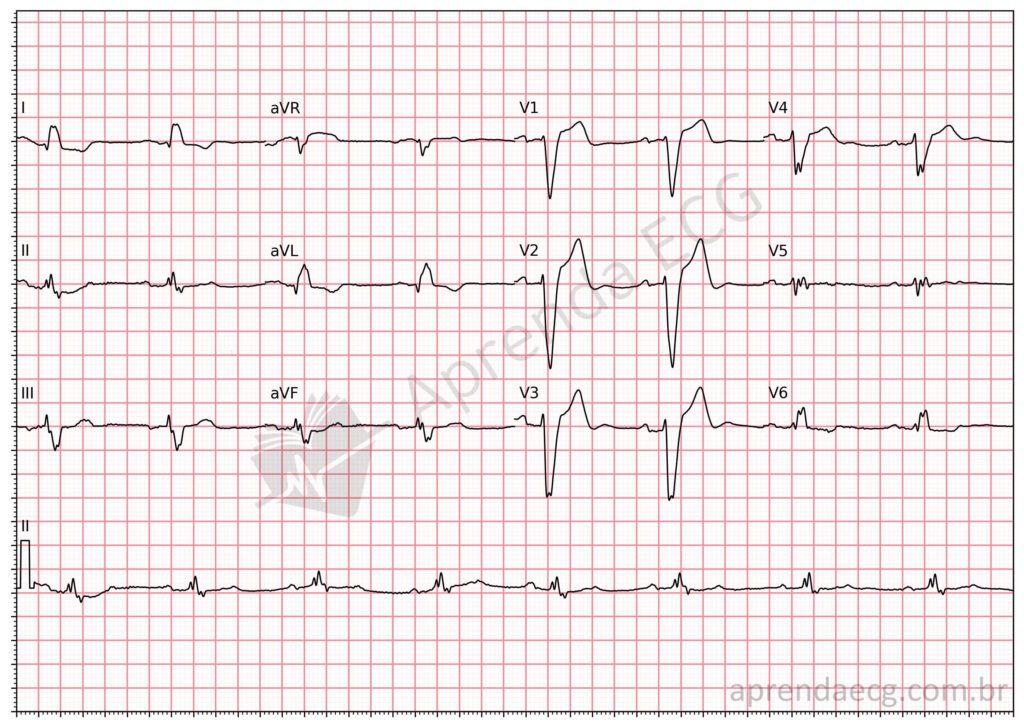
QRS fragmentation. LBBB with notching of the QRS complexes.
Related Topics
References
- Das MK, Khan B, Jacob S, Kumar A, et al. Significance of a fragmented QRS complex versus a Q wave in patients with coronary artery disease. Circulation. 2006;113(21):2495–501.
- Das MK, Suradi H, Maskoun W, Michael MA, et al. Fragmented wide QRS on a 12-lead ECG: a sign of myocardial scar and poor prognosis. Circ Arrhythm Electrophysiol. 2008;1(4):258–68.
- Brohet C. Fragmentation of the QRS complex: the latest electrocardiographic craze? Acta Cardiol. 2019;74(3):185–7.


