Bradycardia-tachycardia syndrome, or tachy-brady syndrome, is a challenging condition that is part of the spectrum of sinus node dysfunction (SND). Characterized by alternating episodes of tachyarrhythmias (such as atrial fibrillation, atrial flutter, or atrial tachycardia) and bradyarrhythmias (such as sinus pauses or sinus bradycardia), this syndrome can cause debilitating symptoms, such as syncope or presyncope.
Mechanisms and Etiology
This syndrome is frequently associated with prolonged sinus pauses that occur after episodes of tachycardia terminate. The dysfunction may involve changes in the ion channels responsible for initiating and conducting cardiac action potentials. Although the exact relationship between sinus node dysfunction and atrial fibrillation has not yet been fully elucidated, studies point to a bidirectional connection, with atrial fibrillation contributing to electrical remodeling of the sinus node.
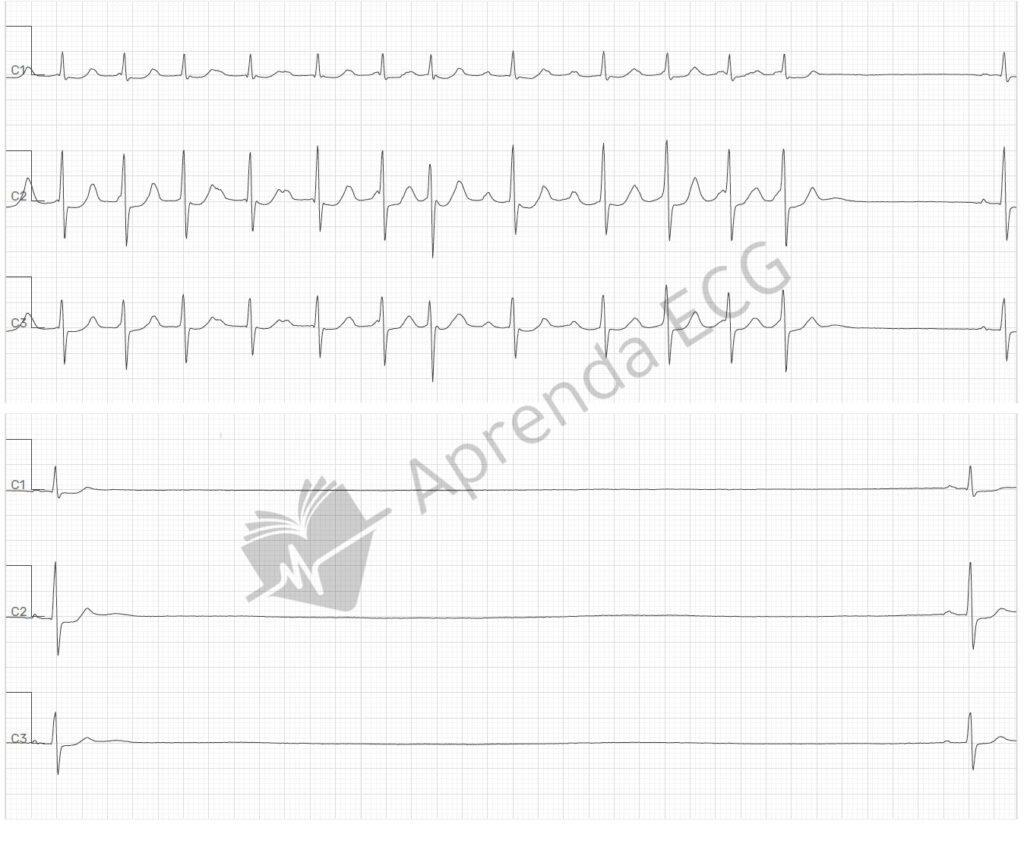
Atrial flutter with variable AV conduction, followed by a prolonged pause after the arrhythmia terminates.
Diagnosis and Clinical Presentation
Patients with tachy-brady syndrome often present with:
- Episodes of palpitations due to the tachyarrhythmia.
- Symptoms of bradycardia, such as fatigue, dizziness, syncope, or presyncope.
- Prolonged sinus pauses after a tachyarrhythmia terminates, often asymptomatic but potentially dangerous.
The diagnosis is based on electrocardiographic recordings, including Holter monitoring or events captured by implantable devices.
Treatment Options
Management of tachy-brady syndrome is multifaceted and requires an individualized approach:
- Permanent Pacemaker Implantation:
- Relieves bradycardia-related symptoms.
- Allows safe use of drugs to control tachyarrhythmias, such as beta-blockers and calcium channel blockers, which could otherwise worsen the bradycardia.
- Atrial Fibrillation Ablation:
- Reduces tachyarrhythmia events.
- Shows significant benefits in reducing mortality, thromboembolic events, and progression of atrial fibrillation.
- In some cases, it may avoid the need for a pacemaker.
Challenges and Future Research
Although pacemaker implantation is common practice, there are no randomized clinical trials specifically addressing its use in patients with tachy-brady syndrome. Recent studies indicate that atrial fibrillation ablation may be a promising alternative, but the choice between strategies should take individual risks and benefits into account.
Conclusion
Bradycardia-tachycardia syndrome is a complex disorder that requires an integrated approach combining accurate diagnosis and personalized treatment options. Future studies are essential to improve our understanding of the relationship between sinus node dysfunction and tachyarrhythmias and to guide best clinical practice for these patients.
References
- Kusumoto FM, Schoenfeld MH, Barrett C, et al. 2018 ACC/AHA/HRS Guideline on the evaluation and management of patients with bradycardia and cardiac conduction delay: a report of the American College of Cardiology/American Heart Association Task Force on Clinical Practice Guidelines and the Heart Rhythm Society. Heart Rhythm. 2019;16(9):e128-e226.
- Kusumoto FM, Schoenfeld MH, Barrett C, et al. 2018 ACC/AHA/HRS Guideline on the evaluation and management of patients with bradycardia and cardiac conduction delay: executive summary: a report of the American College of Cardiology/American Heart Association Task Force on Clinical Practice Guidelines and the Heart Rhythm Society. Circulation. 2019;140(8):e333-e381.
- Tse G, Liu T, Li KH, et al. Tachycardia-bradycardia syndrome: electrophysiological mechanisms and future therapeutic approaches (review). Int J Mol Med. 2017;39(3):519-526. doi:10.3892/ijmm.2017.2877.
- Su L, Wang X, Kang F, Gong C, Chen D. Atrial fibrillation ablation compared to pacemaker therapy in patients with tachycardia-bradycardia syndrome: a systematic review and updated meta-analysis. Medicine (Baltimore). 2024;103(16):e37543.