

The “South African flag” sign reflects acute infarction of the mid-anterior wall caused by occlusion of the first diagonal branch of the left anterior descending artery.
ECG Criteria
- ST-segment elevation in I and aVL, sometimes V2-V3
- Reciprocal ST-segment depression in the inferior wall
ECG in the South African Flag Sign
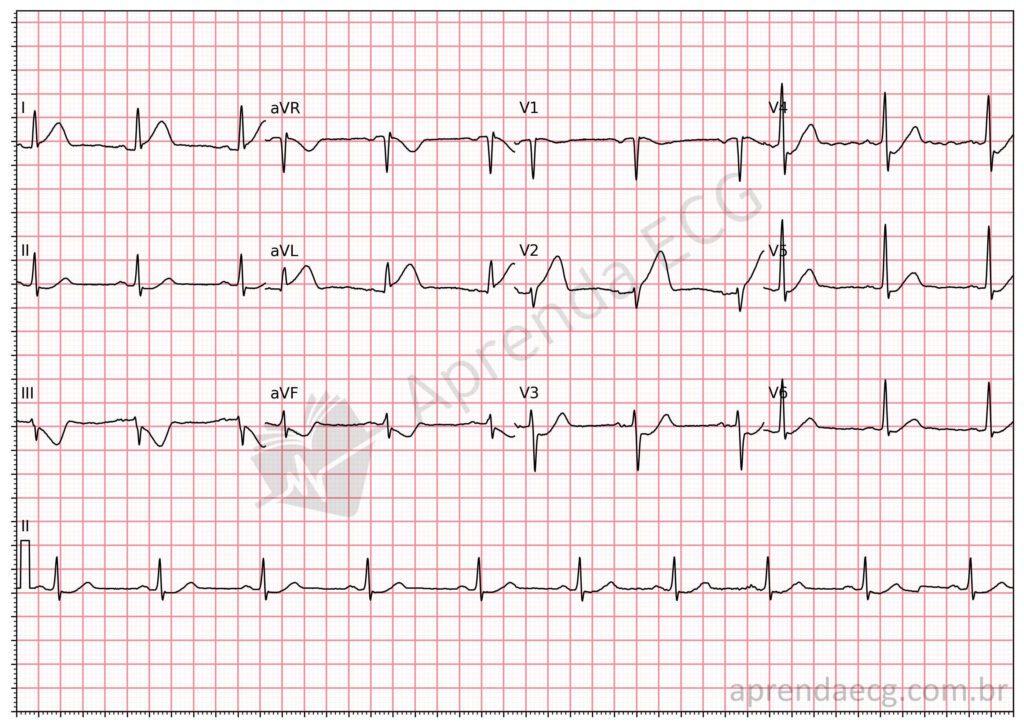
Acute mid-anterior wall infarction. Note the ST-segment elevation in the mid-anterior wall (leads I, aVL, and V2) with reciprocal depression in the inferior wall (most prominent in III). This finding is consistent with acute coronary occlusion of the first diagonal branch of the left anterior descending artery and is also known as the South African flag sign.
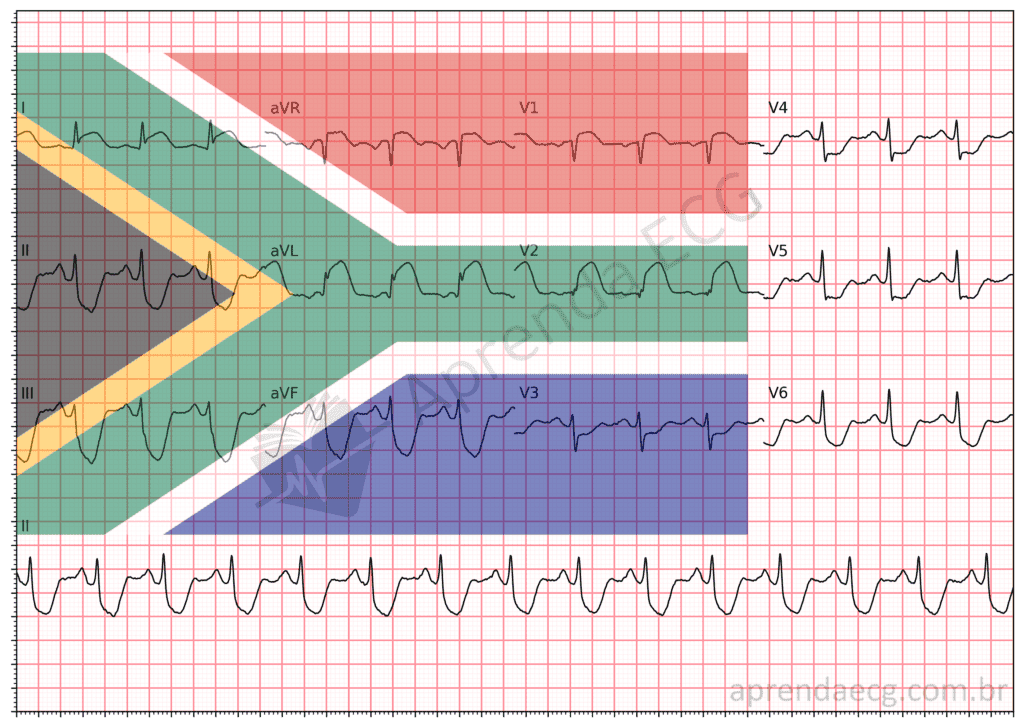
South African flag sign. The ST-segment deviations follow the green Y-shaped band of the South African flag, with ST-segment elevation in leads I, aVL, and V2, and depression in III.
Related Topics
References
- Alencar JN. Tratado de ECG. 2022.
- Littmann L. South African flag sign: A teaching tool for easier ECG recognition of high lateral infarct. Am J Emerg Med. 2016;34(1):107–9.
- Rajendran G, Mahalingam S, Kagne R, Nathan B. The South African flag sign—an electrocardiographic sign to predict the culprit artery. QJM An Int J Med. 2021;114(9):665–6.


