

HCM is an autosomal dominant genetic disease characterized by left ventricular hypertrophy, usually asymmetric and not explained by other systemic or cardiac diseases. It is the most common cause of sudden death in young people, including competitive athletes, and the ECG is abnormal in more than 90% of patients.
Electrocardiographic Findings
- Deep, dagger-like Q waves with duration ≤ 35 ms in the inferolateral leads
- Signs of LVH
- Tall R waves in V1 and V2 (septal hypertrophy)
- T-wave inversion in the inferolateral leads. Giant negative T waves (> 10 mm) suggest the apical pattern, or “Yamaguchi syndrome”
ECG in Hypertrophic Cardiomyopathy
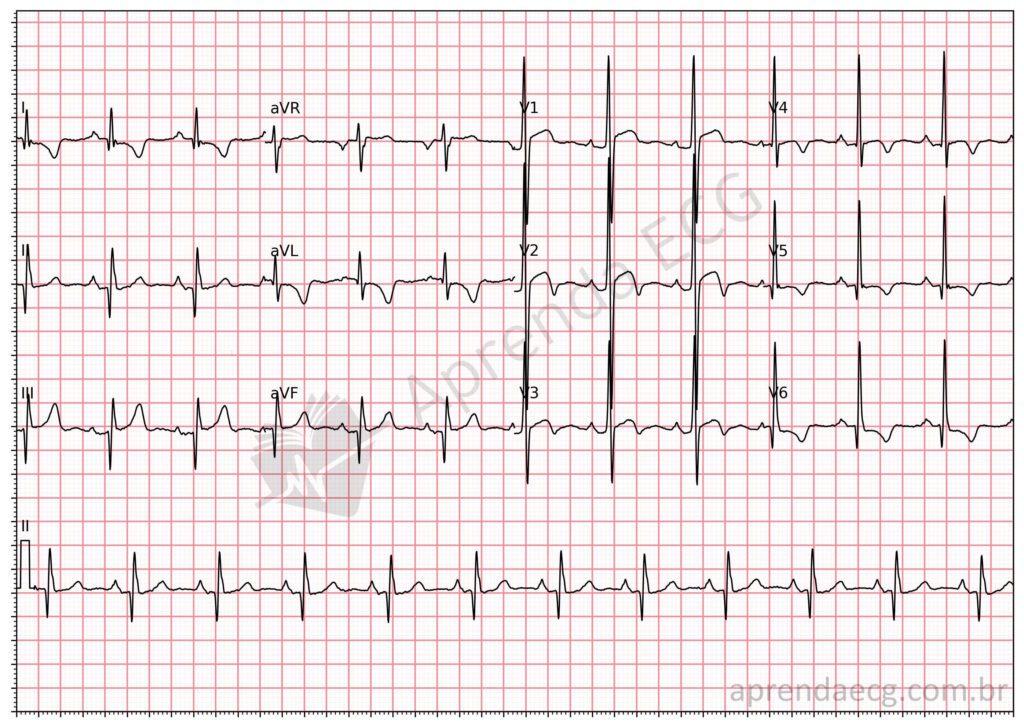
Hypertrophic cardiomyopathy. Deep, dagger-like Q waves in the inferolateral leads and tall R waves in V1 and V2 indicating septal hypertrophy.
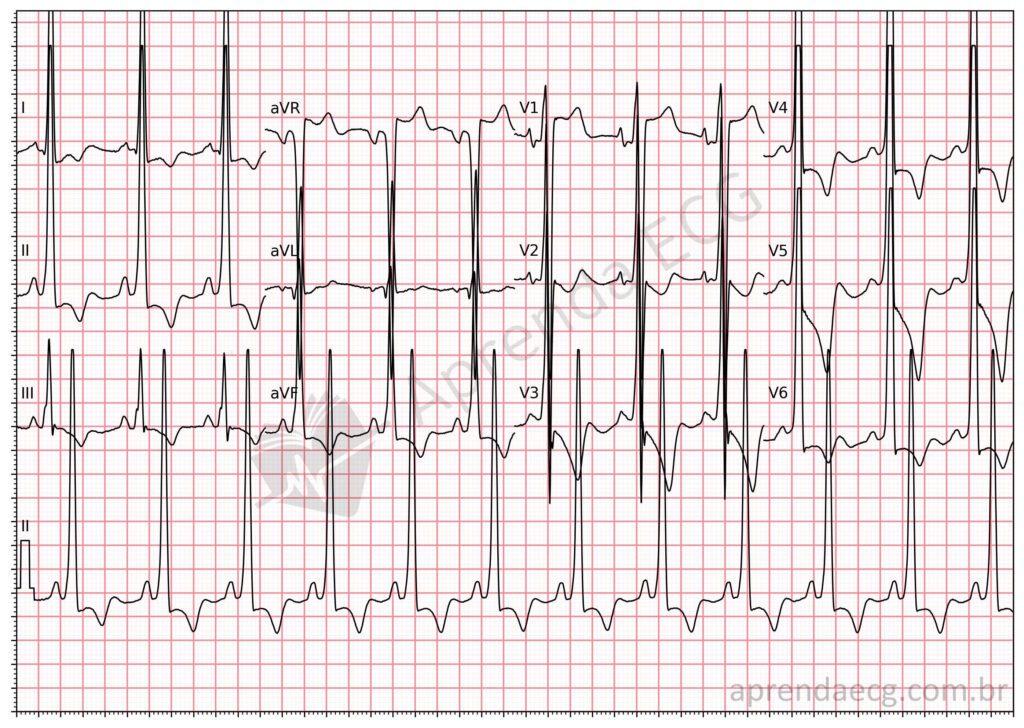
Hypertrophic cardiomyopathy. ECG with signs of left atrial enlargement and left ventricular hypertrophy. The QRS complexes show markedly increased voltage, and the repolarization abnormalities, with ST-segment depression and negative T waves, are very evident.
References
- Scheffer MK, De Marchi MFN, de Alencar Neto JN, Felicioni SP. Eletrocardiograma de A a Z. São Paulo: Manole, 2024.
- Yamaguchi H, Ishimura T, Nishiyama S, Nagasaki F, et al. Hypertrophic nonobstructive cardiomyopathy with giant negative T waves (apical hypertrophy): Ventriculographic and echocardiographic features in 30 patients. Am J Cardiol. 1979;44(3):401–12.


