
What the de Winter Pattern Is and Why It Matters Clinically
The de Winter pattern is a rare and fascinating presentation on the electrocardiogram (ECG), considered a STEMI equivalent. Although less common, recognizing it can save lives, because it signals acute thrombotic occlusion of the left anterior descending artery (LAD) without the typical ST elevation we expect to see in STEMI. In this article, we explore how this pattern presents dynamically, changing over time, and why immediate recognition is crucial for effective intervention.
Electrocardiographic Features of the de Winter Pattern
The de Winter pattern is characterized by J-point depression ≥ 1 mm from V1 or V2 through V6, followed by tall, symmetric T waves, often accompanied by ST-segment elevation in aVR. Although originally described as a static pattern, recent research shows that the de Winter pattern can be a transient phenomenon, evolving dynamically over time, as reported in several case reports. This dynamic evolution may involve transitions between the de Winter pattern and ST-segment elevation, often within a short period of time.
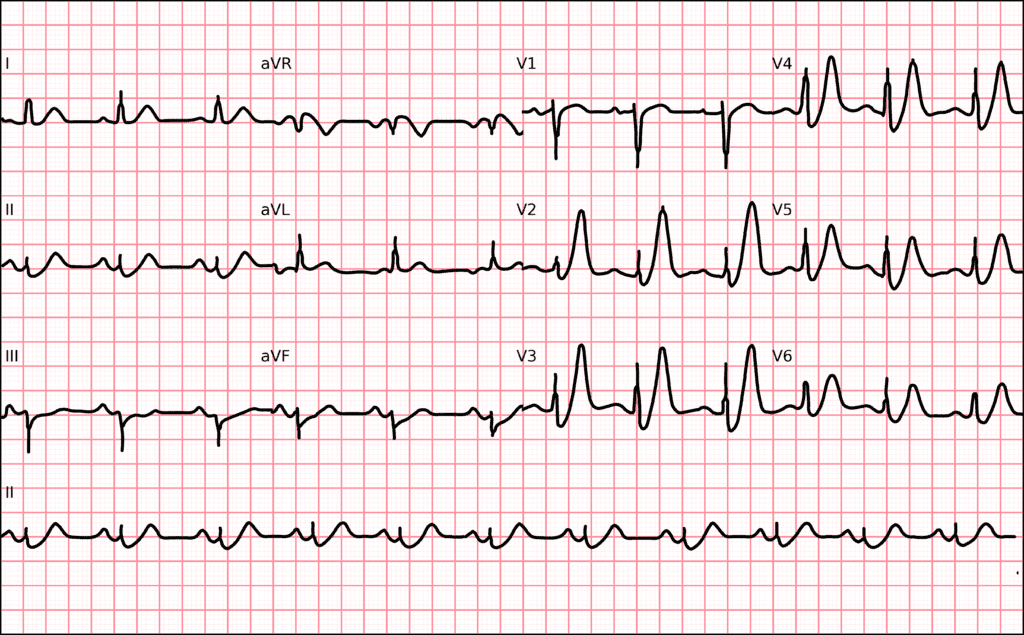
The Dynamic Evolution of the de Winter Pattern
In clinical cases, the de Winter pattern can appear after a STEMI, or vice versa. Some reports indicate that this transition can occur between 20 and 50 minutes after symptom onset, as observed in patients with acute LAD occlusion without significant collaterals.
Although the exact pathophysiology of this phenomenon is not yet fully understood, some theories suggest that the absence of ST-segment elevation is related to non-activation of ATP-sensitive potassium channels (IKATP) due to ATP depletion during ischemia. Other explanations propose that the de Winter pattern occurs with subocclusion of the LAD that progresses to total occlusion, resulting in ST-segment elevation. This pattern may also be associated with recruitment of collateral flow that reduces transmural ischemia, limiting the amplitude of ST-segment elevation.
Case reports also show that the de Winter pattern can be seen both at the onset of occlusion and after an attempt at recanalization of the artery, as reported in situations in which the pattern appeared during thrombolytic therapy or after partial LAD recanalization. These examples emphasize the importance of continuous monitoring and rapid response to changes in the ECG pattern.
It is essential that cardiologists and emergency clinicians recognize the de Winter pattern as a STEMI equivalent and be prepared for immediate intervention, preferably urgent coronary angioplasty. A conservative approach risks missing the opportunity to treat the infarction with early, effective intervention.
Key Points
- The de Winter pattern is a STEMI equivalent that occurs in about 2-3% of left anterior descending artery occlusions.
- This pattern can evolve into ST-segment elevation or appear after it, suggesting a dynamic phenomenon.
- ATP depletion due to ischemia and non-activation of IKATP channels may explain the absence of ST-segment elevation.
- Rapid intervention is crucial once the de Winter pattern is identified, to prevent progression to significant myocardial loss.
References
- de Winter RJ, Verouden NJW, Wellens HJJ, Wilde AAM. A New ECG Sign of Proximal LAD Occlusion. N Engl J Med. 2008;359(19):2071–3.
- Guo J, Li Z, Wu Y. ST-Segment Elevation Followed by de Winter Electrocardiogram Pattern in a Patient With Chest Pain. JAMA Intern Med. 2023 Aug 1;183(8):873.
- Ramakumar V, Panda A, Yadav S. A Rare Sequence of Events in Acute Coronary Syndrome. JAMA Intern Med. 2021 Oct 1;181(10):1391.
- Wang H, Dai X-C, Zhao Y-T, Cheng X-H. Evolutionary de Winter pattern: from de Winter ECG to STEMI-A case report. BMC Cardiovasc Disord. 2020 Dec 6;20(1):324.
- Xu J, Wang A, Liu L, Chen Z. The de winter electrocardiogram pattern is a transient electrocardiographic phenomenon that presents at the early stage of ST-segment elevation myocardial infarction. Clin Cardiol. 2018;41(9):1177–84.