

Clinical Case
A 28-year-old man, previously healthy, presents to the emergency department with intense palpitations, diaphoresis, and dizziness that started about 40 minutes earlier.
He reports similar self-limited episodes in the past. He denies chest pain or dyspnea.
On examination:
- HR ≈ 220 bpm
- BP: 90/60 mmHg
- Alert, anxious, and diaphoretic
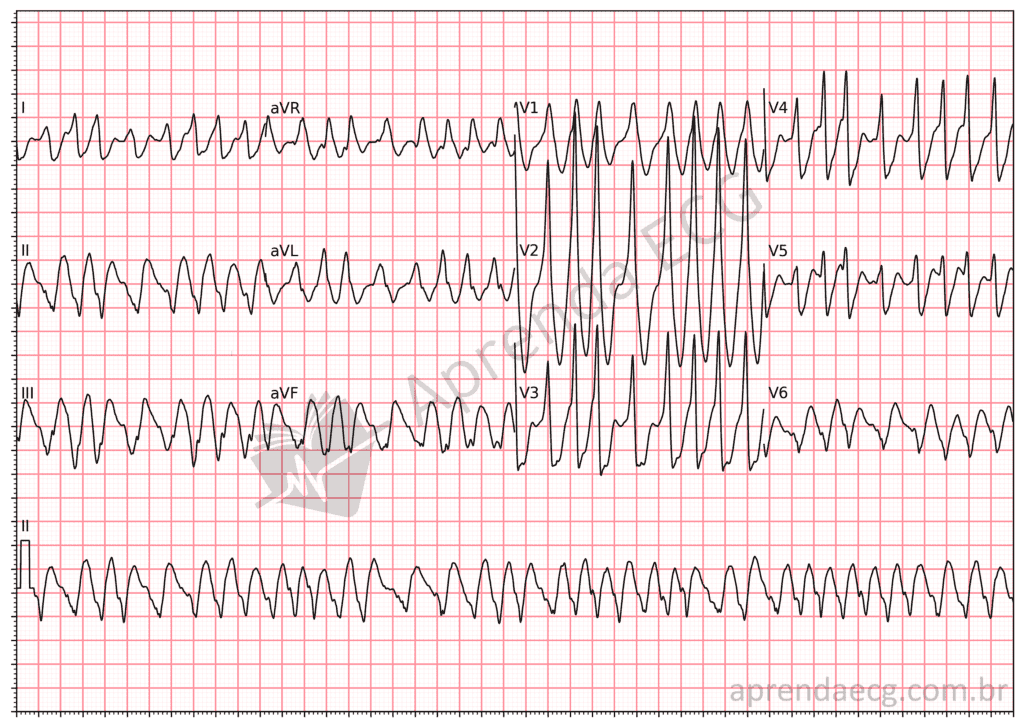
A 12-lead ECG was obtained on admission.
Question
What arrhythmia is seen on the ECG, and what should the initial management be?
Answer and discussion
1) Electrocardiographic diagnosis
The tracing shows:
- A completely irregular tachyarrhythmia
- Wide QRS
- Variable QRS morphology
- No organized P waves
This pattern is highly suggestive of pre-excited atrial fibrillation.
The differential diagnosis includes polymorphic ventricular tachycardia, but the extreme irregularity and beat-to-beat QRS variation favor AF with conduction over an accessory pathway.
2) Electrophysiological mechanism
In pre-excited atrial fibrillation, the disorganized atrial impulse is conducted to the ventricles predominantly over an accessory pathway with anterograde conduction, bypassing the AV node.
This results in:
- Very high ventricular rates
- Wide, variable QRS complexes
- Risk of degeneration into ventricular fibrillation
3) Immediate management
The patient has hemodynamic instability (hypotension).
The correct management is:
- Immediate synchronized electrical cardioversion
Important contraindications:
- Beta-blockers
- Calcium channel blockers
- Digoxin
- Adenosine
These drugs slow conduction through the AV node and may favor exclusive conduction over the accessory pathway, increasing the risk of ventricular fibrillation.
4) ECG after cardioversion
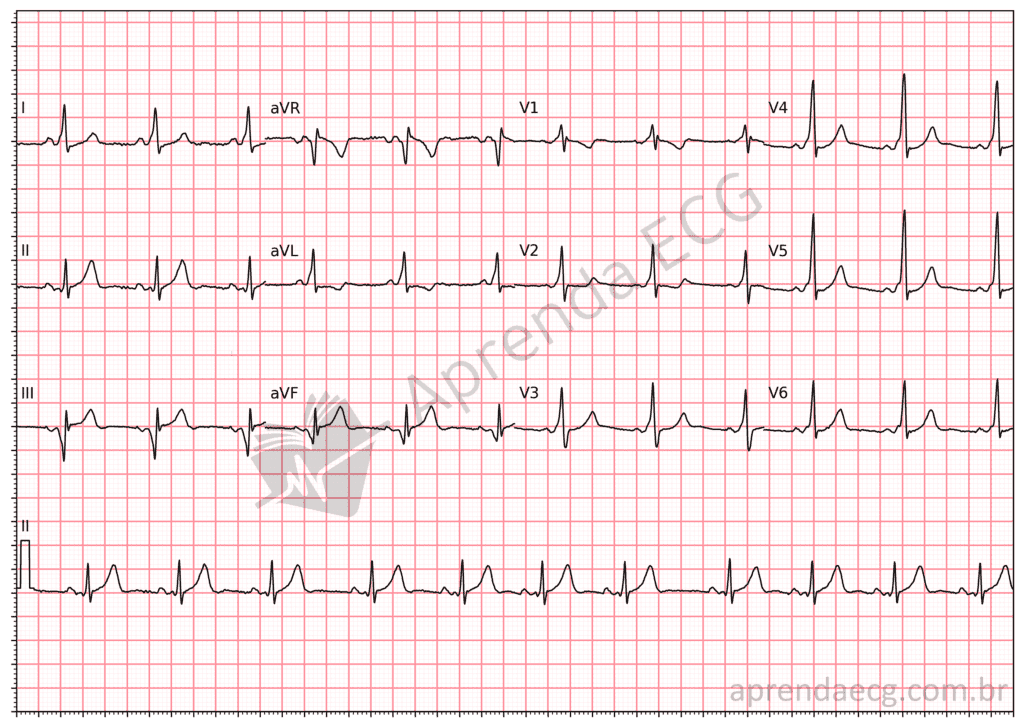
After cardioversion, the ECG shows:
- Sinus rhythm
- Short PR
- Delta wave
These findings are consistent with manifest ventricular pre-excitation, characteristic of Wolff-Parkinson-White syndrome.
Practical points
- An irregular wide QRS tachyarrhythmia in a young patient should raise suspicion of pre-excited AF.
- Instability → immediate cardioversion.
- Avoid AV nodal blocking drugs.
- Refer for electrophysiological evaluation and ablation of the accessory pathway.