
The electrocardiographic assessment of myocardial ischemia has evolved significantly over the past decades. One of the most relevant classifications for risk stratification in ST-elevation myocardial infarction (STEMI) was proposed by Birnbaum and Sclarovsky. This classification divides ischemia into three grades based on changes in the ST segment and the QRS complex, allowing a better prognostic estimate for patients.
Classification of the Grades of Ischemia
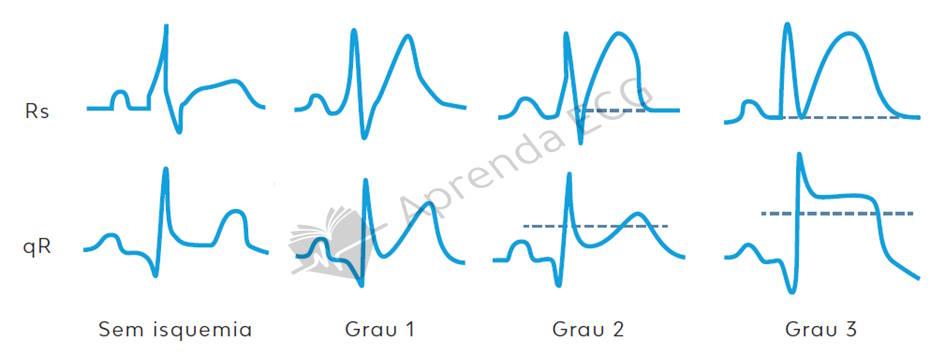
- Grade I: this stage is characterized by tall, symmetric, peaked T waves without ST-segment elevation (hyperacute T waves).
- Grade II: in grade II, there is ST-segment elevation, but without distortion of the terminal portion of the QRS.
- Grade III: grade III represents the most severe form of ischemia and is characterized by ST elevation with terminal QRS distortion (reduction or disappearance of the S wave in leads with an Rs configuration, or J-point elevation above 50% of the R-wave amplitude in leads with a qR configuration). Patients with grade III ischemia have higher in-hospital mortality and a larger final infarct size compared with the other grades.
Prognostic Implications
Patients with grade III ischemia have a higher rate of complications, such as reinfarction and heart failure, as well as poorer long-term recovery of ventricular function. This is due to the accelerated progression of myocardial necrosis and the lower efficacy of reperfusion therapies in these cases.
On the other hand, patients with grade II ischemia respond more favorably to reperfusion, especially if treated within the first hours after symptom onset. Rapid intervention in these cases can significantly reduce infarct size and improve survival.
Factors Associated With Severe Ischemia (Grade III)
Several factors may contribute to progression to grade III ischemia, including:
- Prolonged ischemia time: delay in restoring blood flow contributes to the progression of myocardial damage.
- Poor collateral flow: patients without significant collateral circulation are at greater risk of extensive ischemia and accelerated necrosis.
- Less protection from ischemic preconditioning: previous brief episodes of ischemia may induce cellular protective mechanisms that slow the progression of necrosis, a phenomenon less common in patients with grade III ischemia.
References
- Birnbaum Y, Sclarovsky S. The grades of ischemia on the presenting electrocardiogram of patients with ST elevation acute myocardial infarction. J Electrocardiol. 2001;34(4):17–26.