

Left ventricular hypertrophy (LVH) is a common condition detected on electrocardiograms (ECG), but diagnosing it accurately remains a challenge. With more than 37 different criteria endorsed by the American Heart Association (2009), the lack of consensus and the variable accuracy of the methods make the task even more complex. Among these criteria, some are widely used but have significant limitations, especially with regard to sensitivity.
Traditional Criteria for Left Ventricular Hypertrophy
The Cornell and Sokolow-Lyon criteria are classic examples of methods used to diagnose LVH. Although the Cornell criterion is often considered the most accurate, its sensitivity ranges from 20% to 40%, which means that a large proportion of LVH cases may go undetected.
The Peguero-Lo Presti Criterion: A Superior Alternative
Introduced in 2017, the Peguero-Lo Presti criterion emerged as a promising solution to improve sensitivity in the diagnosis of LVH. This method uses the sum of the amplitude of the deepest S wave in any lead plus the S wave in lead V4. Recent studies have shown that this criterion outperforms traditional methods in both sensitivity and diagnostic accuracy.
Two recent meta-analyses reinforce this superiority. The first, which included 5,984 individuals, showed that the Peguero-Lo Presti criterion has the highest sensitivity (43.0%) compared with the Cornell (26.1%) and Sokolow-Lyon (22.0%) criteria. The second meta-analysis highlighted that the Peguero-Lo Presti criterion not only offers high sensitivity (0.56) but also maintains specificity comparable to that of traditional methods, confirming that it is currently the best option available for diagnosing LVH.
Learn to Apply the Peguero-Lo Presti Criterion
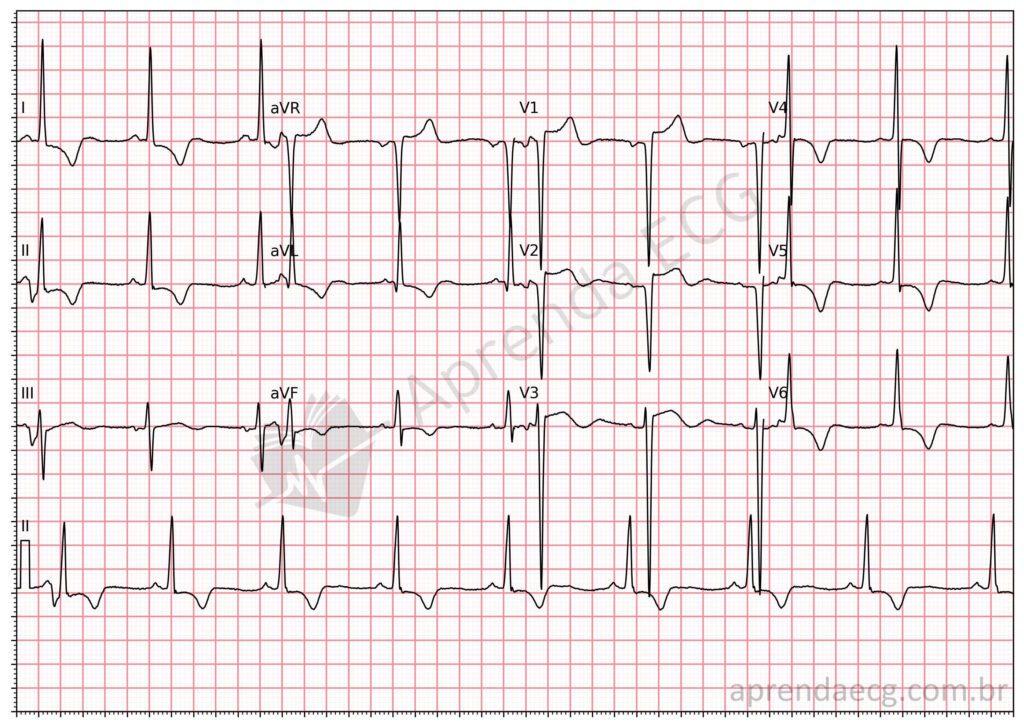
To apply the Peguero-Lo Presti criterion, follow these steps:
- Identify the deepest S wave in any of the ECG leads and record its amplitude (SD).
- Measure the amplitude of the S wave in lead V4 (SV4).
- Add the SD and SV4 values.
LVH is suggested if the sum of the amplitudes (SD + SV4) exceeds the following cutoffs:
- Men: ≥ 2.8 mV (28 mm)
- Women: ≥ 2.3 mV (23 mm)
These cutoffs were established to maximize the sensitivity and specificity of the criterion, making it an effective tool for identifying LVH.
Conclusion: Why Adopt the Peguero-Lo Presti Criterion?
The Peguero-Lo Presti criterion stands out for its simplicity and for capturing LVH cases that traditional methods, such as the Cornell and Sokolow-Lyon criteria, often miss, while maintaining high specificity. In light of this evidence, it is clear that the Peguero-Lo Presti criterion should be considered in clinical practice for the diagnosis of LVH.
Explore Our ECG Library
To see the Peguero-Lo Presti criterion in action and review real cases of LVH, we invite you to explore our ECG Library. This resource offers an excellent opportunity to deepen your knowledge and sharpen your diagnostic skills.
References
- Hancock EW, Deal BJ, Mirvis DM, Okin P, Kligfield P, Gettes LS. AHA/ACCF/HRS Recommendations for the Standardization and Interpretation of the Electrocardiogram. Part V: Electrocardiogram Changes Associated With Cardiac Chamber Hypertrophy A Scientific Statement From the American Heart Association Electrocardiography. J Am Coll Cardiol [Internet]. 2009;53(11):992–1002.
- Peguero JG, Lo Presti S, Perez J, Issa O, Brenes JC, Tolentino A. Electrocardiographic Criteria for the Diagnosis of Left Ventricular Hypertrophy. J Am Coll Cardiol. 2017 Apr;69(13):1694–703.
- Noubiap JJ, Agbaedeng TA, Nyaga UF, Nkoke C, Jingi AM. A meta-analytic evaluation of the diagnostic accuracy of the electrocardiographic Peguero-Lo Presti criterion for left ventricular hypertrophy. J Clin Hypertens. 2020;22(7):1145–53.
- Yu Z, Song J, Cheng L, Li S, Lu Q, Zhang Y, et al. Peguero-Lo Presti criteria for the diagnosis of left ventricular hypertrophy: A systematic review and meta-analysis. PLoS One. 2021;16(1 January):1–14.