

LQTS is a rare and heterogeneous genetically determined disease, most often familial with an autosomal dominant pattern, caused by mutations in the genes encoding the potassium, sodium, or calcium ion channels of myocytes. It prolongs ventricular repolarization and increases the likelihood of ventricular arrhythmias (such as torsades de pointes) and sudden cardiac death. Types 1, 2, and 3 account for more than 90% of cases.
ECG Changes
- Prolonged QT interval (when > 500 ms, it considerably increases the risk of malignant arrhythmias such as torsades de pointes
- LQTS type 1: broad-based, large T wave
- LQTS type 2: wide, bifid, low-amplitude T wave with notches
- LQTS type 3: long isoelectric ST segment, with a late-onset, short-duration, peaked T wave
ECG in Long QT Syndrome
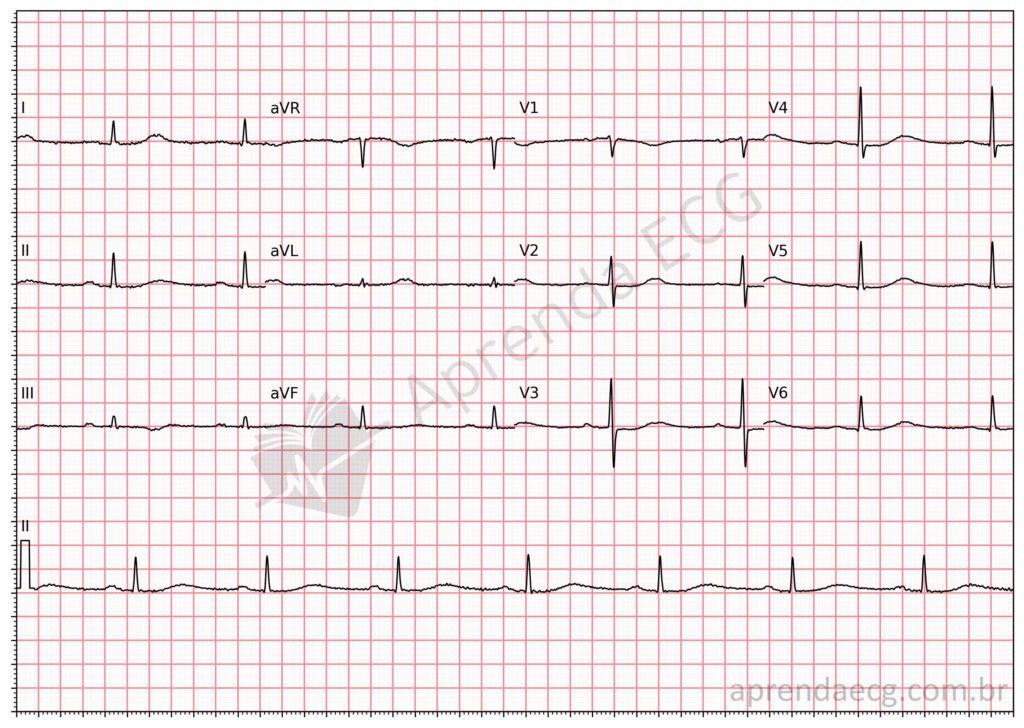
Long QT interval. The upper limit of normal for the QT interval varies with age and sex. In this example, the heart rate is 61 bpm, the RR interval is 980 ms, the QT interval is 498 ms, and the QTc (Bazett) is 503 ms.
Related Topics
References
- Scheffer MK, De Marchi MFN, de Alencar Neto JN, Felicioni SP. Eletrocardiograma de A a Z. São Paulo: Manole, 2024.
- Zeppenfeld K, Tfelt-Hansen J, de Riva M, et al. 2022 ESC Guidelines for the management of patients with ventricular arrhythmias and the prevention of sudden cardiac death Developed by the task force for the management of patients with death of the European Society of Cardiology ( ESC ). Eur Heart J. 2022;1–130.


