
The new European guideline on atrial fibrillation (AF) brought significant updates to the CHA2DS2-VASc algorithm, used to stratify the risk of thromboembolic events and decide on the need for anticoagulation. CHA2DS2-VASc is widely adopted in many countries and remains a practical, simple tool to guide oral anticoagulation (OAC) in patients with AF. However, the new recommendations have sparked important discussions in clinical practice.
What Has Changed?
Previously, the CHA2DS2-VASc algorithm included female sex as an independent risk criterion. However, the new guideline clarifies that female sex is an age-dependent risk modifier rather than a standalone risk factor. This means that young women without other risk factors should not automatically be classified as high risk. In practice, this simplifies the use of the score and avoids unnecessary prescription of anticoagulants to women solely because of their sex.
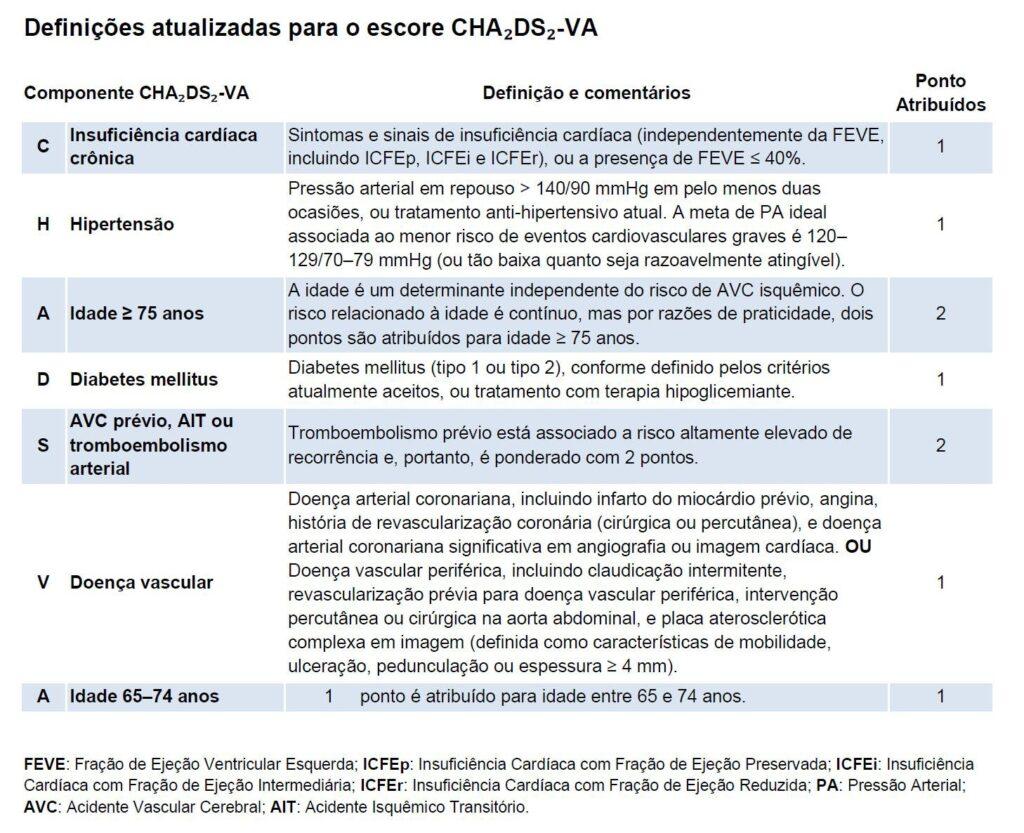
In addition, the new guideline proposes the use of a new score, the CHA2DS2-VA, which excludes female sex as a criterion and focuses on factors such as congestive heart failure, hypertension, advanced age (≥75 years), diabetes mellitus, prior stroke, vascular disease, and age 65-74 years. This change reflects a more individualized approach that takes into account each patient's clinical context.
Biomarkers and Emerging Risk Factors
Another relevant point of the new guideline is the recognition of new risk factors for stroke in patients with AF that are not yet fully incorporated into traditional risk scores. These include conditions such as cancer, chronic kidney disease, and specific biomarkers, such as troponin and natriuretic peptides. These factors have proven important in risk stratification but still lack validation in randomized clinical trials. Studies are underway to assess how these biomarkers can be used for stroke prevention in anticoagulated patients.
The Importance of an Individualized Approach
The guideline emphasizes that, although risk scores such as CHA2DS2-VASc and CHA2DS2-VA are useful, they should not be the only tool in anticoagulation decision-making. The assessment should be individualized, taking into account other patient-specific clinical factors, such as comorbidities, lifestyle, and preferences. This involves a patient-centered approach in which decisions are shared between physician and patient, ensuring that treatment is tailored to individual needs and expectations.
Conclusion
The new European atrial fibrillation guideline brings important updates to the use of the CHA2DS2-VASc algorithm, with the introduction of the CHA2DS2-VA score, which eliminates female sex as an independent risk criterion. In addition, the recognition of new risk factors and the need for an individualized approach underscore the complexity of risk stratification and the importance of personalizing treatment. As research on biomarkers and emerging risk factors continues to evolve, new evidence is expected to further shape clinical practice and optimize the management of patients with AF.
References
- Van Gelder IC, Rienstra M, Bunting K V, Casado-Arroyo R, Caso V, Crijns HJGM, et al. 2024 ESC Guidelines for the management of atrial fibrillation developed in collaboration with the European Association for Cardio-Thoracic Surgery (EACTS). Eur Heart J [Internet]. 2024 Aug 30;42(5):373–498.