
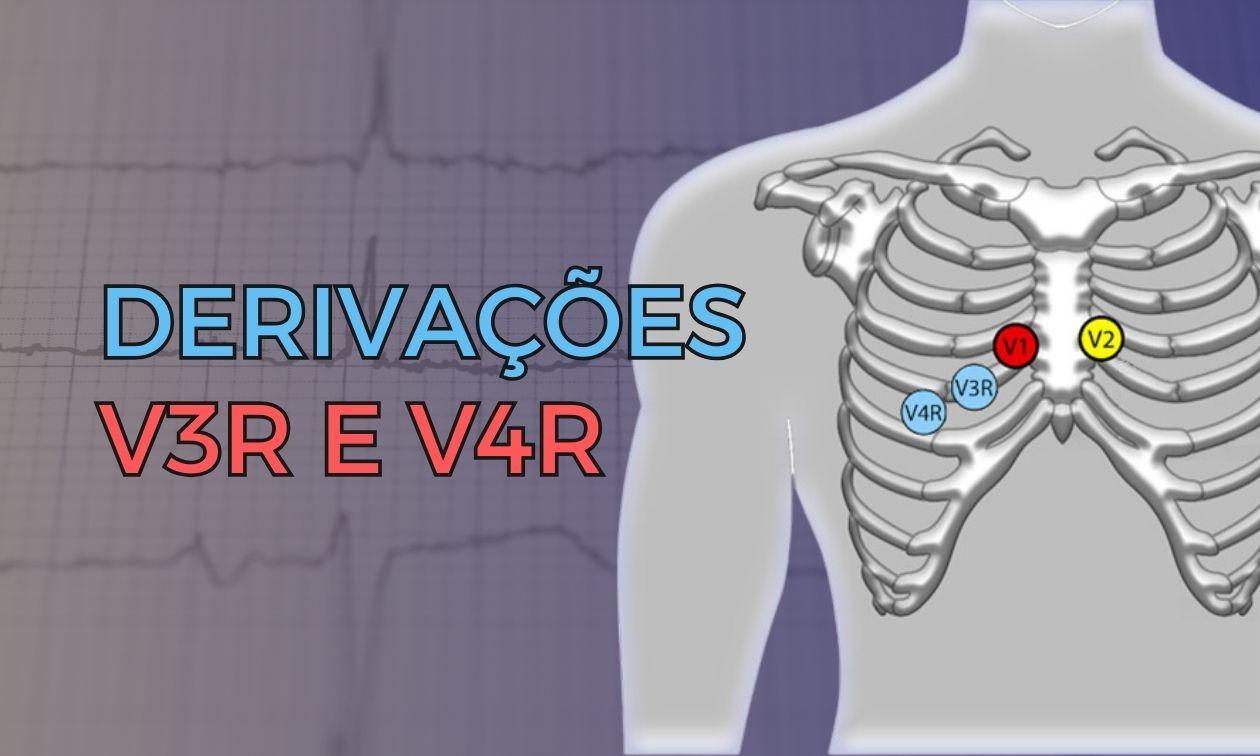
The electrocardiographic leads V3R and V4R play a key role in identifying acute myocardial infarction (AMI) with right ventricular involvement. These leads are not part of the standard 12-lead ECG, but they are crucial in specific situations. In this article, we discuss when to use them, how to place them correctly, and which criteria we use to diagnose right ventricular infarction, as well as how to identify the culprit artery.
When Should V3R and V4R Be Used?
Leads V3R and V4R are particularly useful in the following clinical situations:
- Inferior wall infarction: whenever there is ST-segment elevation in leads II, III, and aVF, the right ventricle should be assessed. Right ventricular infarction is frequently associated with involvement of the proximal right coronary artery.
- Suspected hemodynamic compromise: cardiogenic shock or unexplained bradycardia may suggest right ventricular involvement.
- Chest pain with an inconclusive ECG: analysis of these leads can clarify the diagnosis in patients with symptoms suggestive of acute coronary syndrome.
How to Place Leads V3R and V4R
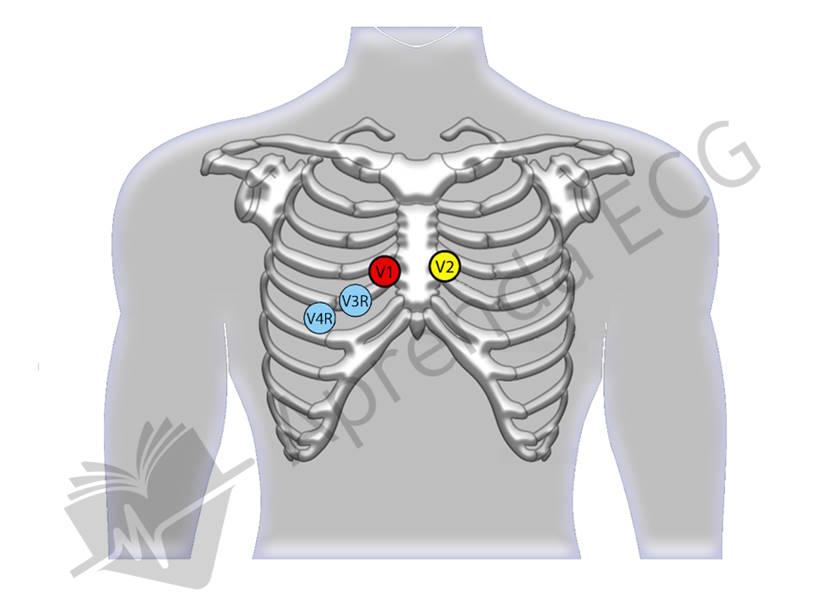
Leads V3R and V4R are placed on the right side of the chest, mirroring the conventional positions of V3 and V4. Here is the step-by-step guide to placing them correctly:
- V4R: locate the 5th intercostal space at the right midclavicular line, equivalent to the position of V4 on the left side.
- V3R: place the electrode between V1 and V4R, following the same pattern as V3 on the left.
Make sure the leads are labeled correctly to avoid confusion during analysis.
Criteria for Infarction in Leads V3R and V4R
The diagnostic criterion for acute myocardial infarction in these leads is ST-segment elevation, with the following parameters:
- ST elevation ≥ 0.5 mm in at least one of the leads (V3R or V4R).
It is important to remember that these changes must be associated with a compatible clinical context, such as typical chest pain and elevated markers of myocardial necrosis.
What Is the Culprit Artery in Right Ventricular Infarction?
Right ventricular infarction most commonly results from occlusion of the right coronary artery (RCA) in its proximal segment. This occlusion compromises blood supply to the right ventricle, resulting in significant hemodynamic dysfunction. Early identification is essential, as management of these cases may include specific strategies, such as avoiding nitrates, which can worsen the clinical picture.
Conclusion
Leads V3R and V4R are valuable tools in the assessment of patients with suspected right ventricular infarction. Their systematic use in selected cases can improve diagnostic accuracy and guide appropriate treatment. By recognizing ST-segment elevation in these leads, it is possible to identify the infarction and correlate it with proximal occlusion of the right coronary artery, optimizing clinical outcomes.
References
- Scheffer MK, De Marchi MFN, de Alencar Neto JN, Felicioni SP. Eletrocardiograma de A a Z. São Paulo: Manole, 2024.