

Right ventricular hypertrophy (RVH) is a condition in which the right ventricle adapts to pressure or volume overload, as occurs in chronic lung disease, pulmonary hypertension and pulmonary valve stenosis. On the electrocardiogram (ECG), RVH is evidenced by changes in the QRS pattern that reflect increased right ventricular mass and pressure overload. The most common electrocardiographic criteria for diagnosis include a dominant R wave in V1, right axis deviation and deep S waves in leads V5 and V6.
Electrocardiographic Criteria
- Right QRS axis deviation > 110°
- High-voltage R wave in V1 and V2 and deep S waves in the opposite leads (V5 and V6)
- Secondary ventricular repolarization changes: ST-segment depression with a negative, asymmetric T wave in the right precordial leads (V1 to V3)
ECG in Right Ventricular Hypertrophy
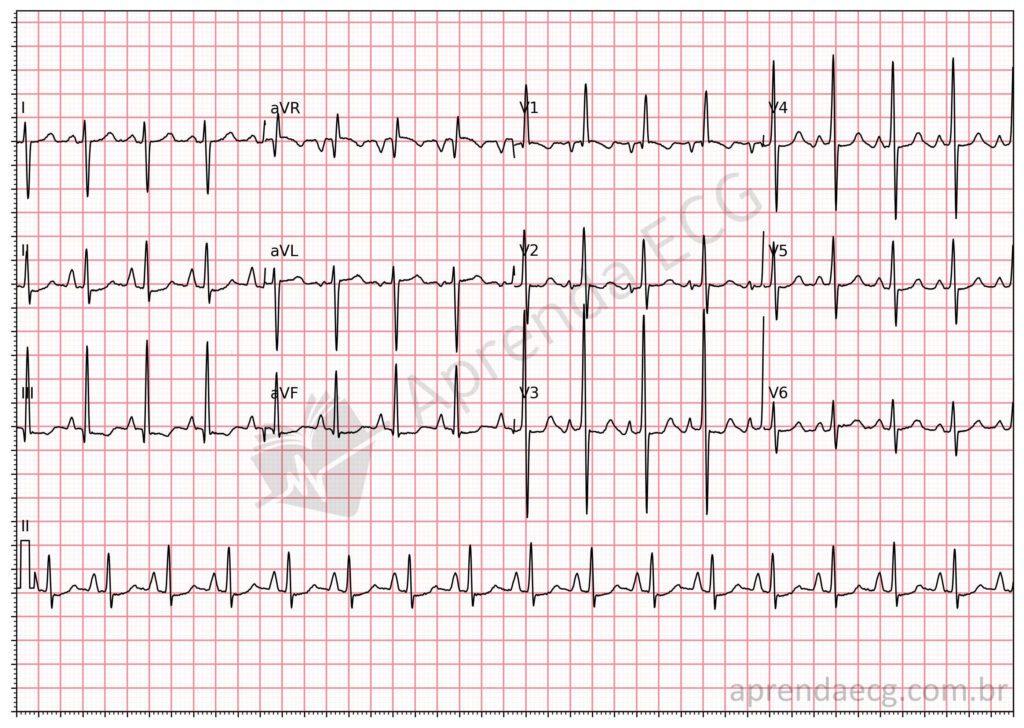
Right ventricular hypertrophy. In RVH we observe right QRS axis deviation and a reversal of the R/S ratio in leads V1 and V6, with increased R-wave amplitude in V1 and S-wave amplitude in V6.
Related Topics
References
- Samesima N, God EG, Kruse JCL, Leal MG, et al. Diretriz da Sociedade Brasileira de Cardiologia sobre a Análise e Emissão de Laudos Eletrocardiográficos – 2022. Arq Bras Cardiol. 2022;93(3 Suppl 2):2–19.


