
ST-segment elevation on the electrocardiogram (ECG) has always been an essential marker for the diagnosis of ST-elevation myocardial infarction (STEMI). However, a systematic review conducted by our team (2024) reveals important limitations in the diagnostic accuracy of ST elevation for identifying acute coronary occlusion (OMI). This article explores the findings of this research and how they may affect clinical practice in the management of MI.
Sensitivity and Specificity of ST-Segment Elevation in Acute Coronary Occlusion
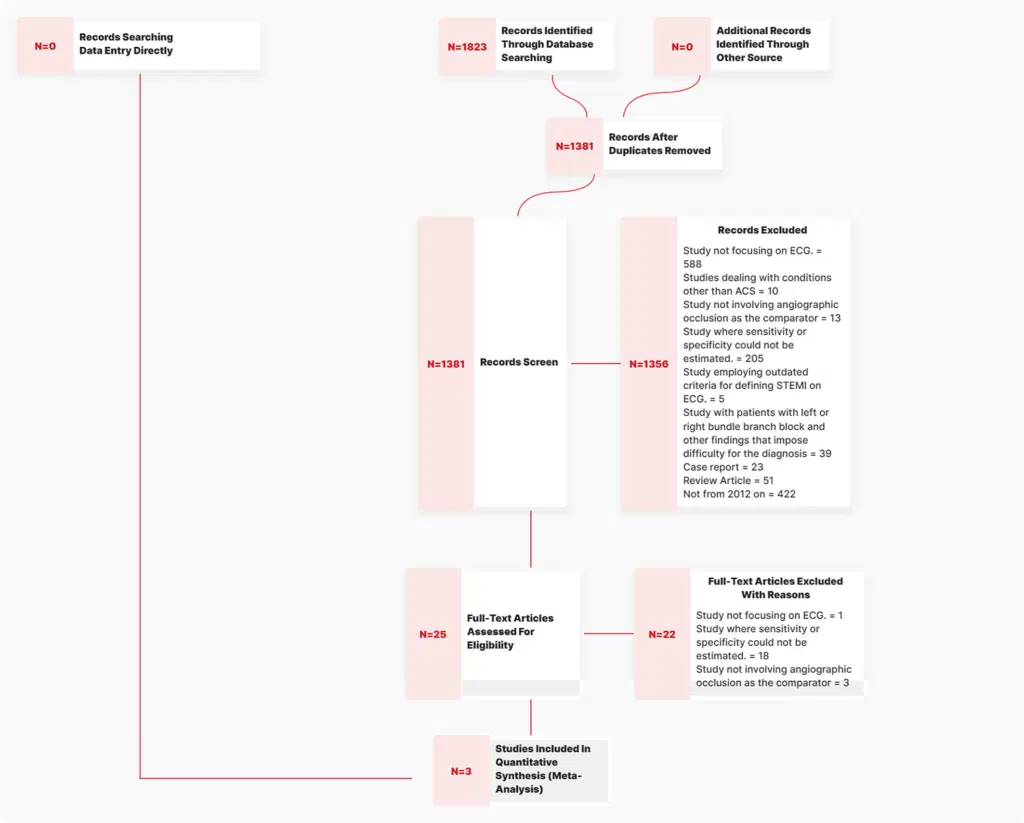
The review included three studies involving 23,704 patients with suspected acute coronary syndrome (ACS). The results show that the sensitivity of ST-segment elevation for detecting OMI was only 43.6%, while specificity was high, reaching 96.5%. This means that more than half of patients with OMI do not show ST-segment elevation on the ECG, which can result in delays in appropriate treatment, such as emergency angioplasty.
The Challenge of the STEMI-NSTEMI Paradigm
The current STEMI-NSTEMI paradigm, based mainly on electrocardiographic findings, may underestimate the presence of OMI in patients without ST elevation. This approach, focused on ST-segment elevation, fails to consider the pathophysiological process underlying most cases of MI: coronary occlusion. As a result, many patients with OMI are misclassified as NSTEMI, which can delay appropriate treatment.
The OMI/NOMI Strategy: A Promising Alternative
A promising alternative to the current paradigm is the OMI/NOMI strategy, which considers electrocardiographic markers beyond ST elevation, such as hyperacute T waves, the de Winter pattern, the Aslanger pattern, terminal QRS distortion, among others. When applied, this strategy significantly improved diagnostic sensitivity for OMI, reaching 78.1%. This highlights the importance of a broader approach to the diagnosis of MI.
Conclusion
The systematic review challenges the effectiveness of ST-segment elevation as the sole marker of OMI and suggests that the STEMI-NSTEMI paradigm may need to be revisited. Adopting the OMI/NOMI strategy offers a more accurate and comprehensive approach to the diagnosis of MI, with the potential to significantly improve patient outcomes.
References
- de Alencar Neto JN, Scheffer MK, Correia BP, Franchini KG, Felicioni SP, De Marchi MFN. Systematic review and meta-analysis of diagnostic test accuracy of ST-segment elevation for acute coronary occlusion. Int J Cardiol. 2024 Feb;131889.